The people behind the threads
The women of Herat’s saffron harvest
Most of the hands that turn a crocus field into a tin of threads in Herat belong to women. Here is what the published figures say, and what they leave out.
How many women work in saffron
In March 2025 the head of the Afghanistan National Saffron Union, Haji Mohammad Ibrahim Adil, told Pajhwok Afghan News that about 80,000 women work in the saffron sector across Afghanistan, 70,000 of them in Herat province. He said women do 95 percent of the saffron work in Herat such as picking the flowers, processing and packaging, while men mainly plant and irrigate.
Counts depend on who is counting and when. In November 2026, around Herat’s 11th Saffron Flower Festival, the union put harvest-season employment at nearly 50,000 people, about 95 percent of them women, as DID Press reported on 24 November 2026. Read both as orders of magnitude from one body: tens of thousands of women, for a few weeks a year.
A short season
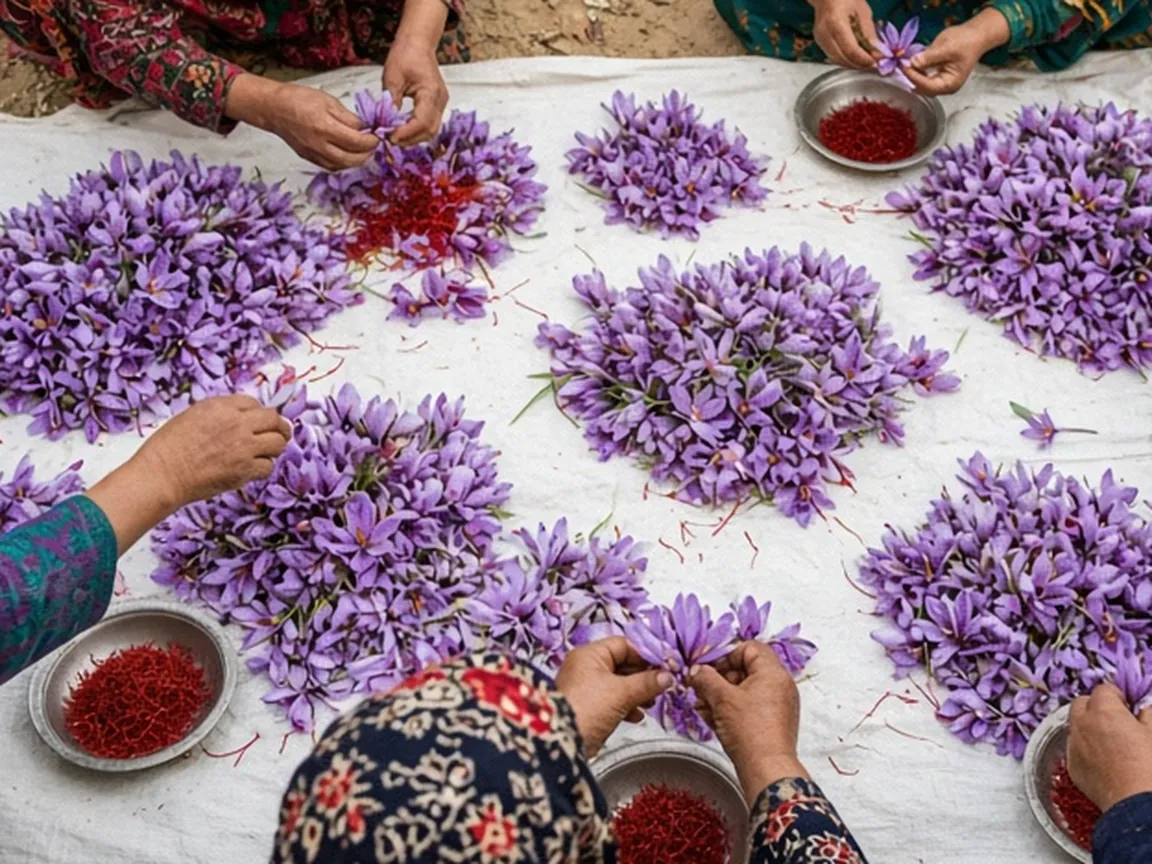
Saffron flowers in Herat for a few weeks in late autumn, so the work comes all at once. A processing-centre owner in Herat told Pajhwok that the women she hires have work for about two months a year, and asked for support so women could find work in other farm fields for the rest of the year. One worker at that centre said she earned 7,000 afghanis a month during the season.
The pay, next to the price of the threads
In November 2026 a woman in Herat told reporters she was paid 50 afghanis for cleaning one kilogram of saffron flowers, while a kilogram of dried saffron was worth about 100,000 afghanis on the domestic market (DID Press; Xinhua gave the same domestic price, about $1,550 a kilo). The two numbers are not a ratio on their own, because it takes a great many kilos of flowers to make one kilo of dried threads. The gap is still why reporters keep asking how much of the export money reaches the people doing the handwork.
Running their own centres
Some women run the business side too. Pajhwok profiled Ariana Rahmani, who trained in saffron processing and set up her own processing and distribution centre in Herat. In the season it employs about 10 women directly in processing and packaging and around 600 indirectly in flower collection and cleaning. She said extreme heat had cut yields in the two years before the interview.
Xinhua’s January 2026 feature from Herat, headlined “Saffron industry creates job opportunities for Afghan women”, put the country’s 2025 output at nearly 41 tons, citing agriculture ministry officials.
What this means for the tin you buy
A tin cannot tell you who cleaned it or what they were paid. What you can ask a seller is where the saffron was sorted and packed. The seller we link to, AfgSaffron, says its own sorting and packing team in Herat is about 25 women; we have not visited it. The harvest itself, from flower to dried thread, is on the Herat saffron harvest.
Threads sorted and packed in Herat
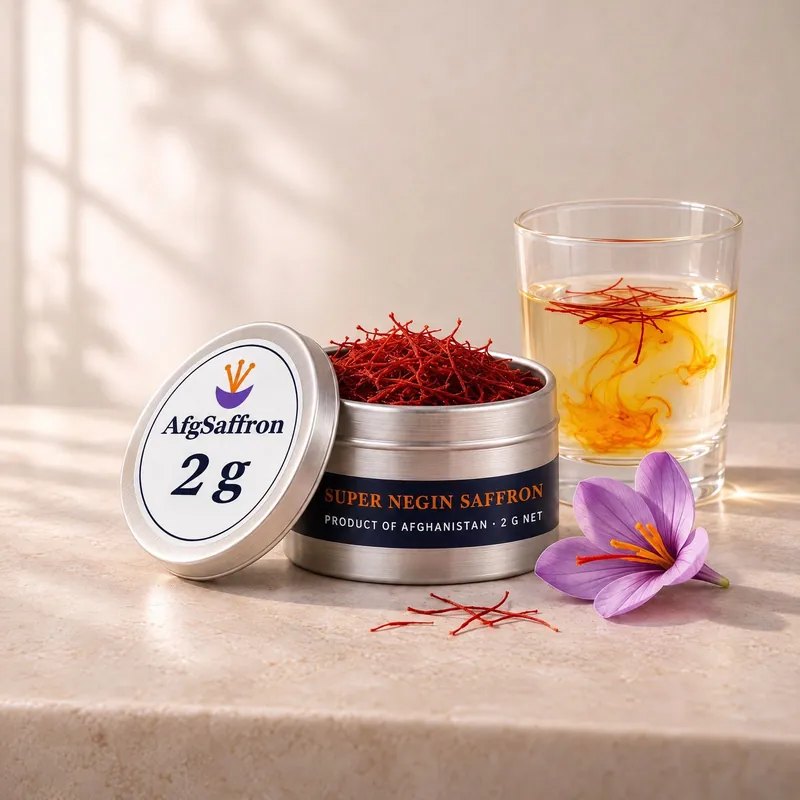
In stock on afgsaffron.com when we last looked (27 Nov 2026): the 2 g jar only. The store’s price at checkout is the one that counts. Orders ship within the US only. Photos: AfgSaffron.
Affiliate links: we earn a commission if you buy through this or any AfgSaffron link on this page, at no extra cost to you.
Sources
- Pajhwok Afghan News (15 Mar 2025), Herat woman sets up saffron production centre, creates jobs: Afghanistan National Saffron Union figures
- DID Press (24 Nov 2026), Afghanistan’s saffron exports top $48M as workers struggle with low wages
- Xinhua (19 Nov 2026), Afghanistan exports over 31 tons of saffron worth 48 mln USD in first 7 months
- Xinhua (24 Jan 2026), Feature: Saffron industry creates job opportunities for Afghan women
- AfgSaffron home and product pages: Herat origin, cut, sorting team (read 26 Nov 2026)
Store details last read 26 Nov 2026.